
OEMs across semiconductor, aerospace, medical, and advanced computing sectors are facing a new wave of design challenges: higher signal speeds, shrinking device footprints, denser packaging, and more demanding thermal profiles. As these pressures increase, many engineering teams are moving away from generic interconnects and adopting custom sockets designed specifically for next generation electronic assemblies.
Custom sockets provide performance advantages that standard catalog parts simply cannot match, especially in applications involving RF signal integrity, chip scale packaging (CSP), and high density test environments. This shift is reshaping how OEMs approach reliability, manufacturability, and long term product lifecycle planning.
Why Custom Sockets Are Becoming the New Standard
1. Performance Requirements Are Outpacing Off the Shelf Options
Modern electronics demand higher bandwidth, lower noise, and tighter mechanical tolerances. Standard sockets often introduce parasitics, impedance mismatches, or mechanical instability that degrade system performance.
Custom sockets allow engineers to specify:
- Contact geometry optimized for signal path length
- Tailored materials for thermal and electrical behavior
- Reinforced housings for vibration heavy environments
- Pin counts and layouts aligned with unique board architectures
This level of control supports consistent performance across prototypes, pilot runs, and full production.
2. High Frequency (RF) Designs Require Precision Contact Engineering
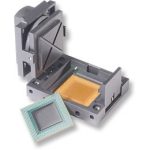 RF systems such as 5G infrastructure, radar modules, satellite communications, and high speed computing, are extremely sensitive to even minor variations in interconnect design. Custom RF sockets address these challenges through:
- Controlled impedance pathways that maintain signal integrity
- Low loss contact materials that reduce attenuation
- Short, uniform signal paths to minimize phase distortion
- Shielding features that limit crosstalk and electromagnetic interference
RF sockets are often engineered with spring probe or coaxial style contacts to support GHz level performance without degradation. For OEMs working in high frequency domains, this precision is a major driver behind the move to custom solutions.
3. CSP Devices Demand Specialized Handling and Support
Chip scale packages continue to shrink, leaving little room for traditional socket designs. CSP sockets must accommodate:
- Ultra fine pitch
- Low insertion force
- Minimal contact resistance
- Tight coplanarity requirements
- Thermal dissipation strategies for high power devices
Custom CSP sockets allow OEMs to integrate features such as floating contact plates, compliant pin structures, and reinforced housings that protect delicate components during test and assembly. This reduces device damage, improves yield, and supports repeatable high volume production.
4. Customization Improves Reliability in Harsh or Variable Environments
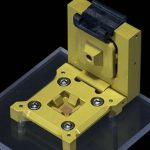 Many next generation systems operate in environments where vibration, temperature cycling, or mechanical shock can compromise standard sockets. Custom designs can incorporate:
- High temperature polymers
- Corrosion resistant alloys
- Mechanical retention features
- Reinforced contact structures
- Tailored plating thicknesses
These enhancements support long term stability in aerospace, automotive, industrial automation, and defense applications.
5. OEMs Gain Greater Control Over Manufacturing and Lifecycle Planning
Custom sockets allow OEMs to:
- Align interconnect design with long term product roadmaps
- Reduce dependency on catalog part availability
- Avoid redesigns caused by discontinued components
- Standardize socket families across multiple product lines
This level of control helps stabilize supply chains and reduces the risk of mid cycle redesigns.
6. Custom Sockets Streamline Test, Validation, and Prototyping
High density test environments like burn in, functional test, RF validation, and CSP characterization, benefit from sockets engineered for:
- Repeatable insertion cycles
- Low wear on device leads
- Consistent electrical performance across thousands of cycles
- Quick change fixtures for rapid device swaps
Custom sockets reduce downtime, improve throughput, and support more accurate test data.
7. Material and Contact Options Expand Design Possibilities
 OEMs can specify materials that match their electrical, thermal, and mechanical requirements, including:
- Beryllium copper, phosphor bronze, or high performance alloys
- Gold, palladium, or nickel plating
- High temperature thermoplastics
- Custom insulator geometries
- Hybrid contact structures for mixed signal devices
This flexibility allows engineers to optimize every aspect of the interconnect.
Custom Sockets: The Bottom Line
OEMs are switching to custom sockets because modern electronics demand higher performance, tighter tolerances, and more specialized handling than standard components can provide. Whether supporting RF signal chains, CSP devices, or high density test environments, custom sockets deliver the precision, reliability, and long term stability required for next generation designs.
Get a tailored socket solution that aligns with your specifications, timelines, and production goals. Start your project by contacting Aries today.